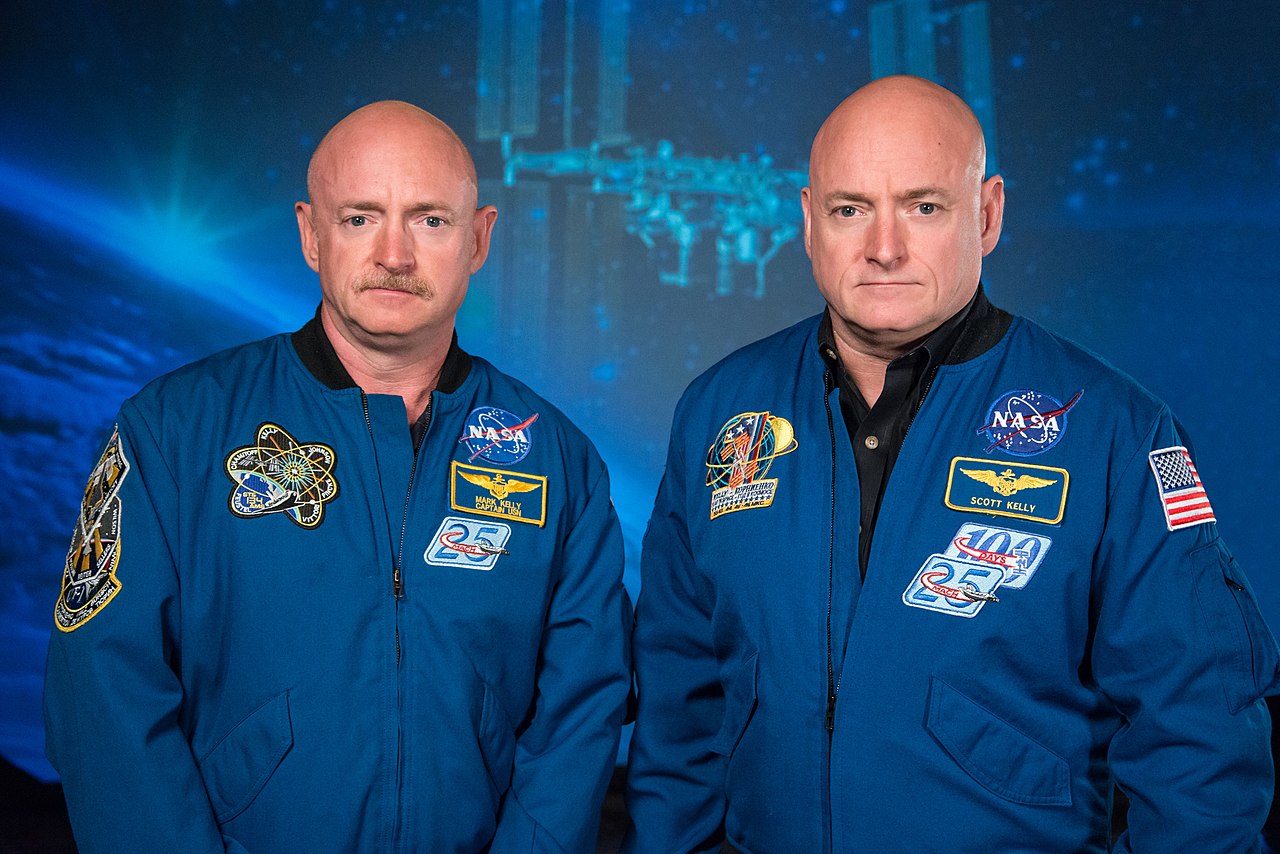
Unraveling the Twin Paradox: How Acceleration Shapes Your Time Experience
Have you ever wondered if time is an unyielding, universal constant, ticking away uniformly for everyone across the cosmos? For centuries, this seemed to be the intuitive truth. Yet, as our understanding of the universe deepened, particularly with the groundbreaking work of Albert Einstein, we discovered a profound secret: time is not absolute. Instead, it’s a deeply personal experience, intrinsically linked to our motion and, more specifically, our acceleration. So,
when does time change? The answer lies in the very fabric of spacetime, and it’s a journey that takes us to the heart of Einstein’s theory of relativity and the fascinating concept known as the Twin Paradox.
Our everyday perception of time is static because we rarely experience speeds or gravitational fields significant enough to notice its malleability. However, when we venture into the realm of extreme velocities or powerful gravitational forces, time reveals its true, flexible nature. This article will explore how motion, speed, and especially acceleration, fundamentally alter our experience of time, culminating in an explanation of the Twin Paradox – a concept that, despite its name, is not a paradox at all, but a stark illustration of relative time.
The Relativity of Motion: A Foundation for Time's Flexibility
To grasp why time isn't fixed, we must first understand the concept of relative motion. Imagine you're in a car driving across the country. From your perspective, the trees, buildings, and everything outside the car seem to be rushing towards you, passing by, and then receding into the distance. Yet, you know instinctively that these objects are stationary relative to the Earth; it is *you* who are in motion. This simple observation highlights a fundamental principle: motion is always described in comparison, or relative, to an observer's frame of reference.
This idea extends to physical laws. If you toss a ball straight up inside your moving car, it will come straight back down into your hand, just as it would if you were standing still on the side of the road. The laws of gravity and motion appear the same to you inside the car as they do to an observer outside. However, the external observer sees the ball not just moving up and down, but also moving forward with the car's velocity. Both observations are valid within their respective frames of reference.
This thought experiment, which predates Einstein, set the stage for his revolutionary insights. He built upon this by introducing the startling idea that the speed of light in a vacuum is constant for all observers, regardless of their own motion. This constancy of light speed is where our common-sense notions about adding velocities begin to break down, and it's also where the answer to "
when does time change" truly begins to unfold. If you're speeding towards an object throwing a ball, you won't simply add your speed to the ball's speed, especially if those speeds are a significant fraction of light speed. This crucial distinction, where the addition of velocities doesn't follow simple arithmetic at high speeds, is a direct consequence of light's unwavering speed limit.
Time Dilation: Speed's Unseen Effect on Your Clock
One of the most mind-bending consequences of special relativity is time dilation – the phenomenon where time passes more slowly for an object as its speed increases relative to an observer. If you were traveling in a spacecraft at, say, 75% the speed of light, and your friend on Earth threw a ball at a certain speed, you wouldn't perceive that ball approaching you at 150% the speed of light. This is because nothing can travel faster than the speed of light – a cosmic speed limit that fundamentally alters how we perceive space and time.
Instead, something far more intriguing happens: the experience of time itself becomes dependent on motion. Each person experiences time normally within their own frame of reference. For the astronaut moving at relativistic speeds, their clock ticks at a normal pace, their heart beats normally, and they age normally *to themselves*. However, for the friend remaining on Earth, the astronaut's clock would appear to tick slower, their heart rate would slow down, and they would age less. This isn't just an illusion; it's a measurable physical reality.
It's only when the astronaut returns to Earth and compares their watch with their friend's that the startling truth is revealed: the astronaut's watch would show less time has passed than the friend's. The astronaut has aged less. This concept, often explored in science fiction, is a well-established scientific fact. This is a primary answer to
when does time change – it changes when there is significant relative motion between observers. For a deeper dive into this phenomenon, read our related article:
How Does Speed Affect Time? Understanding Relativity and Time Dilation.
Unraveling the Twin Paradox: The Role of Acceleration
The phenomenon of time dilation leads directly to one of the most famous thought experiments in physics: the Twin Paradox. Imagine two identical twins. One, let's call her Alice, embarks on a long space journey in a high-speed rocket, traveling close to the speed of light. Her twin, Bob, remains on Earth. According to time dilation, Alice, moving at relativistic speeds, should age slower than Bob. When she returns, Bob should be older than Alice.
But here’s where the "paradox" seems to arise: If motion is relative, couldn't Alice argue that *she* was stationary and *Bob* on Earth was moving away from her and then back? If so, wouldn't Bob be the one aging slower? This apparent contradiction is why it's called a paradox. However, it's not a true paradox because the situation isn't symmetrical. The key to resolving it lies in understanding the difference between relative velocity and absolute acceleration.
While velocities can be relative – Alice sees Bob moving, and Bob sees Alice moving – accelerations are absolute. Alice, the twin on the spaceship, undergoes significant accelerations and decelerations to leave Earth, turn around in space, and return. These changes in speed and direction are not relative; they are experienced physically. She feels the G-forces pushing her into her seat during launch, braking, and turning. Bob, on Earth, experiences relatively constant motion (Earth's rotation and orbit are negligible for this comparison).
Because Alice experiences acceleration, her journey is not equivalent to Bob's. She changes inertial frames, while Bob largely remains in a single inertial frame (or a sequence of very similar ones). It is this absolute acceleration that breaks the symmetry and definitively determines which twin will age less. Alice, the accelerating twin, is the one whose clock will run slower, and she will indeed be younger than Bob upon her return. This is the definitive answer to
when does time change in the context of the Twin Paradox: it changes for the accelerating observer. This distinction is central to understanding
Einstein's Relativity: Why Your Experience of Time Changes with Motion.
Real-World Implications and Surprising Facts
While the Twin Paradox might sound like theoretical musings, the principles of relativity have profound and measurable real-world implications:
*
GPS Satellites: Perhaps the most practical application of time dilation is in the Global Positioning System (GPS). Satellites orbiting Earth travel at high speeds (around 14,000 km/h) and experience slightly weaker gravity than on Earth's surface. Both factors affect the rate at which time passes for them. Without accounting for these relativistic effects (both special and general relativity), GPS systems would quickly accumulate errors, making their location data inaccurate by several kilometers per day. The clocks on GPS satellites are continuously adjusted to compensate for these time shifts, ensuring the accuracy we rely on daily.
*
Atomic Clocks: Experiments with highly precise atomic clocks have repeatedly confirmed time dilation. In 1971, the Hafele-Keating experiment flew atomic clocks around the world on commercial airliners and compared them to a stationary clock. The results confirmed that the traveling clocks had indeed measured slightly less time, precisely as predicted by Einstein's theories.
*
Cosmic Rays and Muons: Subatomic particles called muons are created in Earth's upper atmosphere when cosmic rays collide with air molecules. Muons have a very short lifespan – about 2.2 microseconds. According to classical physics, they shouldn't survive long enough to reach Earth's surface. However, due to their extremely high speeds (close to the speed of light), time dilation extends their perceived lifespan from our perspective, allowing them to travel much farther and reach detectors on the ground. This provides powerful evidence for relativistic time.
These real-world examples underscore that the question of "
when does time change" isn't merely theoretical; it's a tangible aspect of our universe that we encounter and even manipulate in modern technology. The relative nature of time is not just an oddity; it's a fundamental principle governing the cosmos.
Conclusion
The journey to understand
when does time change leads us down a fascinating path, from the simple observation of relative motion to the profound implications of Einstein's theories of relativity. We've seen that time is not a fixed, universal constant, but a flexible dimension that can be stretched and compressed by speed and, crucially, by acceleration. The Twin Paradox, far from being an unsolvable riddle, vividly demonstrates how absolute acceleration breaks symmetry and dictates which observer will experience less time.
From the precise workings of GPS satellites to the fleeting existence of cosmic muons, the relativistic nature of time is not just a concept confined to textbooks but a verified reality that shapes our technology and our understanding of the universe. So the next time you glance at a clock, remember that its ticking is not absolute, but a personal measure within your own frame of reference – a testament to the incredible, elastic nature of time itself.